Taste Changes the Maker
How taste becomes intent, and how making changes it in return


Taste, craft, and intent are doing a LOT of work in conversations about AI right now. I come across posts and articles claiming “taste is the new moat,” “AI doesn’t know craft,” or “intent is what remains human (I did say this once in a fireside chat)” at least once a day. These words often bleed into one another, and I am not sure we mean the same things by them. So what are we actually talking about?
After a few months of bothering friends and a couple of AI agents with this question, here is my current answer:
Taste is the cultivated ability to notice meaningful differences in a field, form a strong point of view about them, and revise that point of view through experience.
Intent is taste applied to a specific situation. It gives the work direction and turns that direction into a commitment.
Craft brings intent into contact with reality, where both the work and the intent can change.
Judgment runs through this entire process. It is what we exercise when we notice a difference, choose a direction, respond to feedback, and decide what to revise.
Learning to hear a difference
In December 2025, I was spending a month in New York and preparing a Hack Week project for Gamma with Claude Code. Around the same time, I had started researching hi-fi audio and learning how differently people define good sound.
One afternoon, I visited Silence Please, a small speaker maker and listening room on the Bowery. Two large speakers filled one end of a spacious, loft-like room. I sat with my coffee and listened.
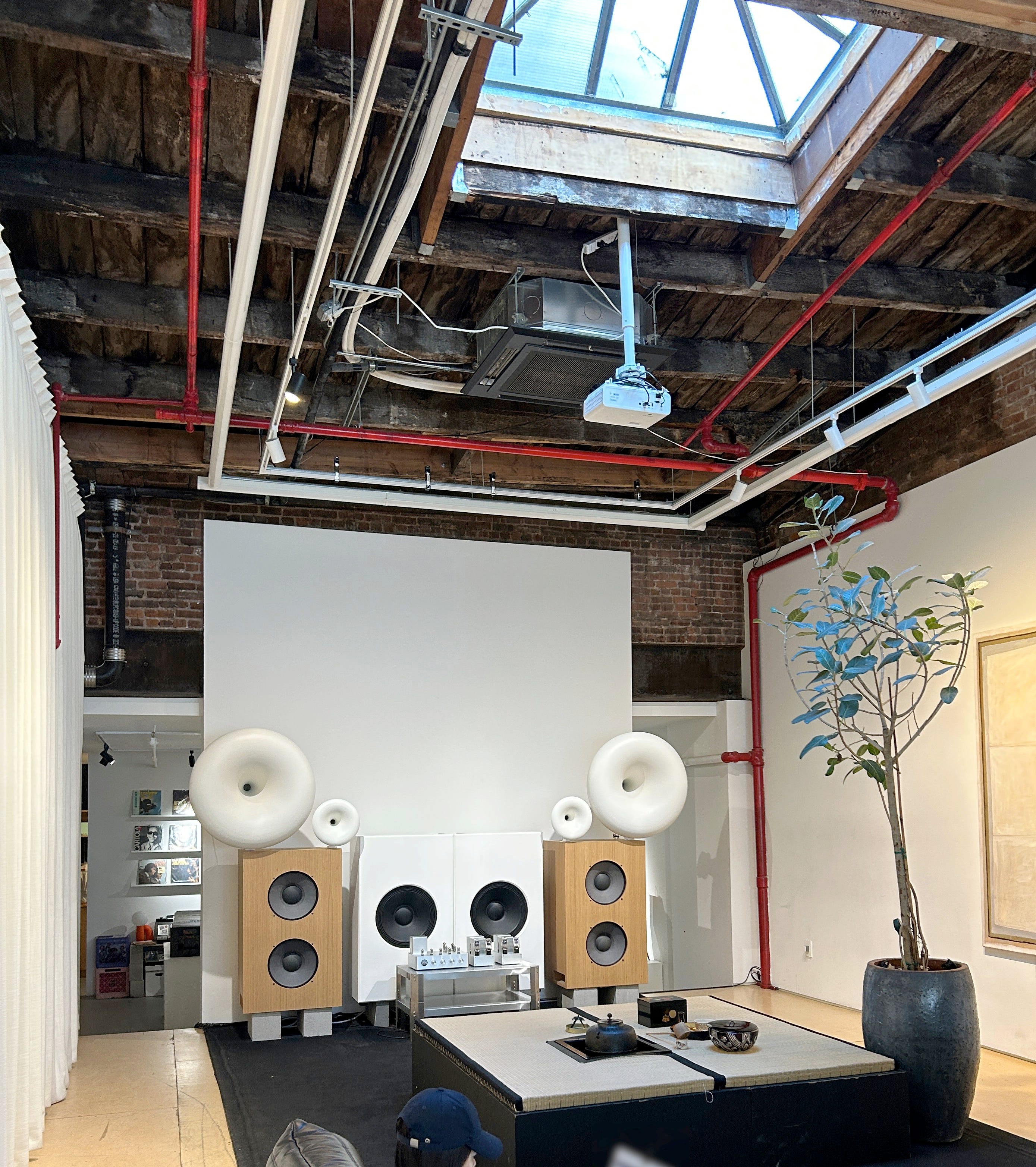
As I dug deeper into the world of audio culture, I started noticing what people mean by “good” sound can vary.
Some listeners want the closest possible reproduction of the original recording room the moment the song was recorded. Some care about what the artist and producer intended. Others prefer warmth, space, detail, or enough bass to feel it physically. Each position can produce a different system, room, and listening experience.
When I got back in SF, I worked through the placement and configuration of my modest Adam Audio speakers based on the shape of my tiny little apartment. I even ordered a cheap DIY speaker set. It has been collecting dust in a corner for months because I have been too busy to set it up.
Audio became one of the recurring examples through which I started building a framework for taste. The differences were real, although there was no single answer that settled them. Learning more gave me a larger vocabulary for hearing, comparing, and explaining what I preferred.
Taste is wider than aesthetics
In product design, taste is often used as shorthand for the ability to make something visually refined or aesthetically current. I find that definition painfully narrow. It reduces taste to styling and leaves out what a designer notices, what they think deserves attention, which tradeoffs they accept, and what they choose to make in the first place.
Taste can shape a typeface, an interaction, a product strategy, or a decision to leave something out. It appears in the distinctions a person is able to perceive and the opinions they have developed about those distinctions.
This understanding has a long history. In Of the Standard of Taste, David Hume connected discernment with practice, comparison, sensitivity, and the work of examining prejudice. Time alone does not produce taste. Experience becomes useful when it sharpens attention and gives us meaningful comparisons.
Other people can accelerate that process. My partner has strong taste in fashion, art, contemporary dance, and food. Contemporary art was already present throughout my childhood because of my father’s work, so her influence has been easier for me to notice in other parts of my life, especially food and everyday choices.
I had a habit of finding one thing I liked and returning to it. Naengmyeon (Korean cold noodle. You should def try it!) meant Hamheung-style naengmyeon. At Paulie Gee’s in Greenpoint, I ordered the Hellboy slice every time. At Bạc Liêu in San Francisco, beef pho. At the Lebanese restaurant I frequented during graduate school in Chicago, a chicken shawarma sandwich.
My partner approaches food with far more curiosity. She tries unfamiliar dishes and develops clear opinions about particular ingredients, textures, and combinations. Eating with her over the past four years has given me more things to compare. I gradually began to notice how often familiarity had been doing the choosing for me.
The people around us gradually change what we are able to notice. Their attention can reveal distinctions we had overlooked and assumptions we had never examined. Taste is personal, although it is never formed alone.
Taste becomes intent in a specific situation
Taste can remain a collection of preferences until a situation asks something of it. Intent gives those preferences a direction.
For a product designer, that direction might be a belief about how much autonomy an agent should have, what deserves to remain visible, or when a system should ask before acting. It might also be a decision about tone, pacing, hierarchy, or what the product should refuse to do.
Intent is a current commitment. It can be held firmly and still change as the work develops. A design rarely begins with every consequence understood. We act on the clearest direction available, see what it produces, and refine the direction with what we learn.
Craft lets reality answer
Craft is sometimes treated as another word for polish. I think of it as the practice of bringing intent into reality.
Materials push back. Code behaves differently from a mockup. A sentence sounds different once it sits beside another sentence. A speaker changes with the room. A product meets people who interpret it through contexts the maker never possessed.
Donald Schön described professional practice as a reflective conversation with the situation. Making produces information that thought alone cannot provide. The person responds, the work changes, and the original framing may change with it.
This is why craft cannot be reduced to execution. It includes the sensitivity to recognize what reality is saying and the ability to respond. It is also why craft changes the maker. Each serious encounter with material, constraints, and feedback can refine the distinctions that become future taste.
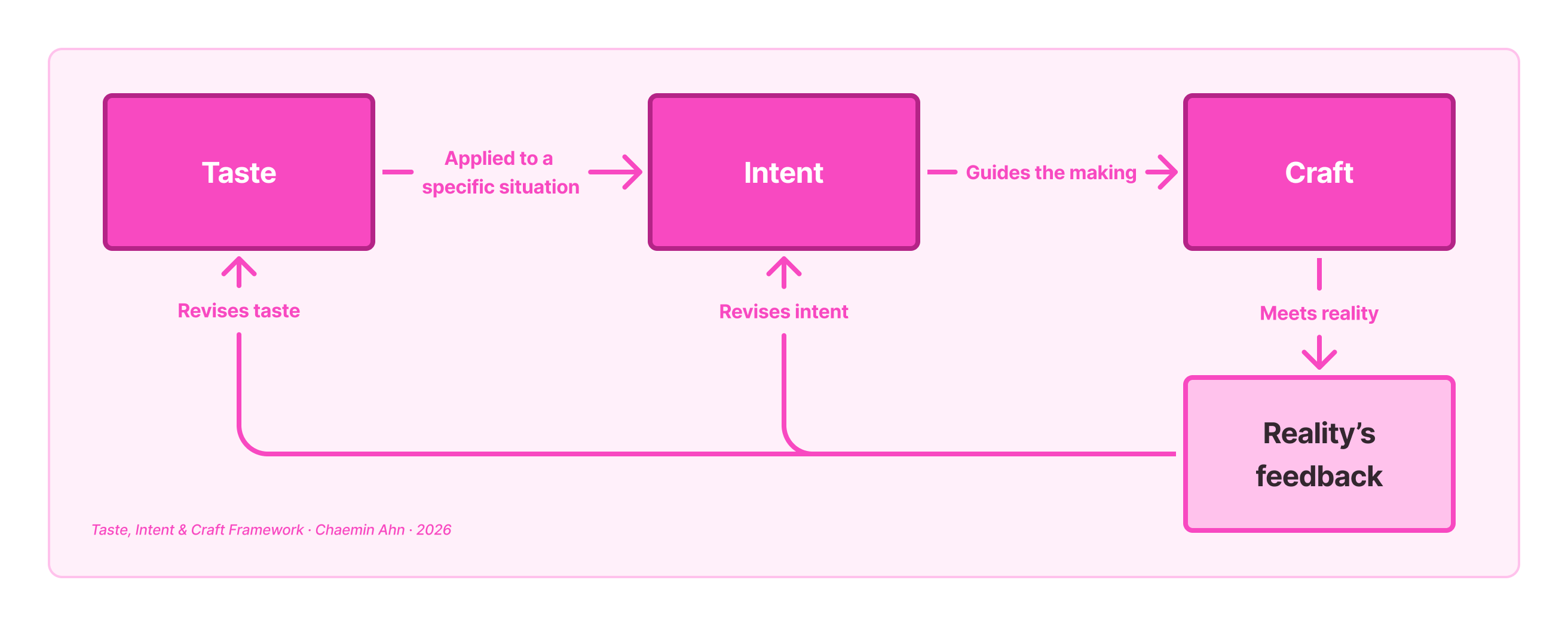
The relationship is cyclical:
Taste → Intent → Craft → Reality’s feedback → Revised taste and intent
AI can speed up the loop and weaken it
AI can teach techniques, imitate styles, generate alternatives, and learn a person’s preferences. I do not believe craft or taste belongs permanently and exclusively to humans. Treating either one as a mystical human moat avoids the more useful question of how they develop.
AI also makes it easy to skip parts of the loop. A person can prompt, receive something polished, select the most appealing option, and stop. Will Manidis makes a related argument in Against Taste: a culture organized around choosing generated outputs can reduce people from makers to selectors.
Selection is still a form of judgment. Its quality depends on what the selector can notice and explain. It becomes limiting when the person never develops an intent of their own or remains too distant from the making to let the work challenge it.
More output does not guarantee a stronger point of view. One study found that access to generative AI improved the creativity of individual stories while also making the collection of stories more similar to one another. The tools expanded what each participant could produce, while shared patterns in the model narrowed the variety across the group.
The human role I care about is active participation in the loop: developing a point of view (taste), committing it to a direction (intent), testing it through making (craft), and accepting responsibility for what follows. AI can participate in every part of that process. People still need enough attention to recognize when the work is changing their mind for a good reason.
“Making” changes what we can notice next
A few weeks ago, I tried to explain taste and intent during an interview with EO Korea. That part did not make the final edit, partly because I had not yet found a clear way to explain it. Writing this essay is another attempt.
While thinking about this topic, I listened again to Joe Goddard’s “Electric Lines”. I have heard it many times, and its lyrics seem to attach themselves to a different question on each return. Today, a song about technological change made me think about taste. The track is familiar. What I am able to hear in it keeps moving.
Taste teaches us what to notice. Intent gives that recognition a direction. Craft lets reality answer back.
The loop works when we remain engaged long enough for “making” to change both the work and the maker.